
Does having a blog actually help with estate agent SEO? It’s a fair question. Most agents already have property listings, area pages and maybe the occasional news update. Adding a blog can feel like “more content for the sake of content.”
But when it’s done properly, a blog is a structured way to attract buyers, sellers and landlords at different stages of their journey, long before they’re ready to fill in a valuation form or book a viewing. Search engines rank websites because they demonstrate relevance, authority and usefulness. A well-planned blog supports all three. It gives you space to target specific keywords, build topical authority in your patch, answer real search queries, and strengthen internal linking across your site.
Read on to find out everything — actually EVERYTHING — you need to know to make content work for your site.
Why have a blog at all?
At the end of the day, it all comes back to revenue. Every instruction to create content, optimise pages or invest in SEO has to link back to pipeline and instructions. A well-made blog is a structured way to attract potential buyers, sellers, landlords and investors before they are ready to speak to an agent, and guide them towards that point.
Not everyone searching online is typing “estate agent in [town]” today. Some are searching “is now a good time to sell in [area]”, “how much is my house worth in [postcode]”, or “stamp duty changes explained”. These are top and middle-of-funnel queries. They signal intent, just not immediate intent. By publishing content that answers these questions, you generate traffic across the funnel. Over time, a proportion of that traffic converts into enquiries, valuations and instructions.
Beyond that, blogs build brand recognition. If your agency repeatedly appears when someone researches their local market, reads about selling timelines, or compares mortgage options, you become familiar — think of it in the same way they might see your signs dotted around the local area. That familiarity reduces friction when they are finally ready to choose an agent. In competitive areas, that mental availability matters.
There is another layer now as well. Large language models and AI-driven search experiences increasingly pull information from authoritative, well-structured content. If your website consistently publishes detailed, relevant content about your area and specialism, it increases the likelihood that your brand is referenced or surfaced in those environments. That visibility compounds over time.
So the rationale is simple. Blogs attract qualified traffic, strengthen your wider SEO performance, and position your brand in emerging AI search experiences. All of those elements feed back into the same goal: more visibility, more trust, and ultimately more revenue.
What goes into a high-quality post?
A high-quality blog post is much, much more than just words on a page. It’s a carefully structured piece of content designed to attract readers, answer their questions, and signal to search engines that your site is authoritative and relevant. Every element, from the page title to internal links, plays a role in how well the post performs (both for human readers and for search engines).
Here’s a complete breakdown of everything content creators look at when they make blog content.
Page title and meta description
The page title is the first thing both search engines and potential readers see. It should be clear, descriptive, and include the main keyword naturally. A strong title communicates what the post is about while enticing users to click, without feeling like clickbait.
Then there’s the meta description. This is the short summary that appears under the page title in search results. It should concisely explain the post’s value, highlight relevant keywords, and give a reason to click. While it doesn’t directly impact rankings, it affects click-through rates, which influence performance over time.
Both the page title and meta description appear in search results.

H1
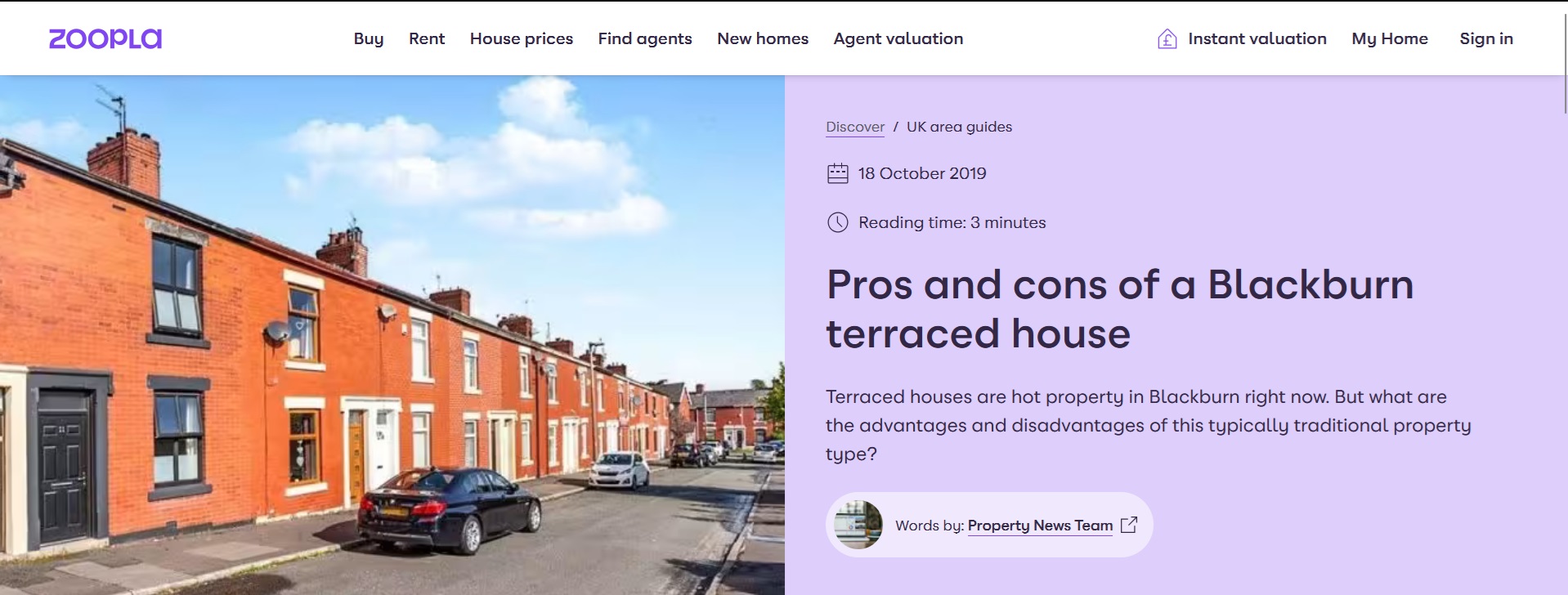
The H1 is the main heading on the page and should match the primary topic of the post. It’s typically the biggest, boldest, most obvious thing on the page when it’s first opened, and is often sat on top of a big featured image for even more impact. It’s often, but not always, the same as the page title. In the screenshot below, it’s on the right — “Pros and cons of a Blackburn terraced house”.
The point of it: it acts as a clear signal for both readers and search engines, reinforcing the subject and setting the tone for the content that follows. It’s the first place your eye goes when you open a page, so everything else follows from there.
Subheadings
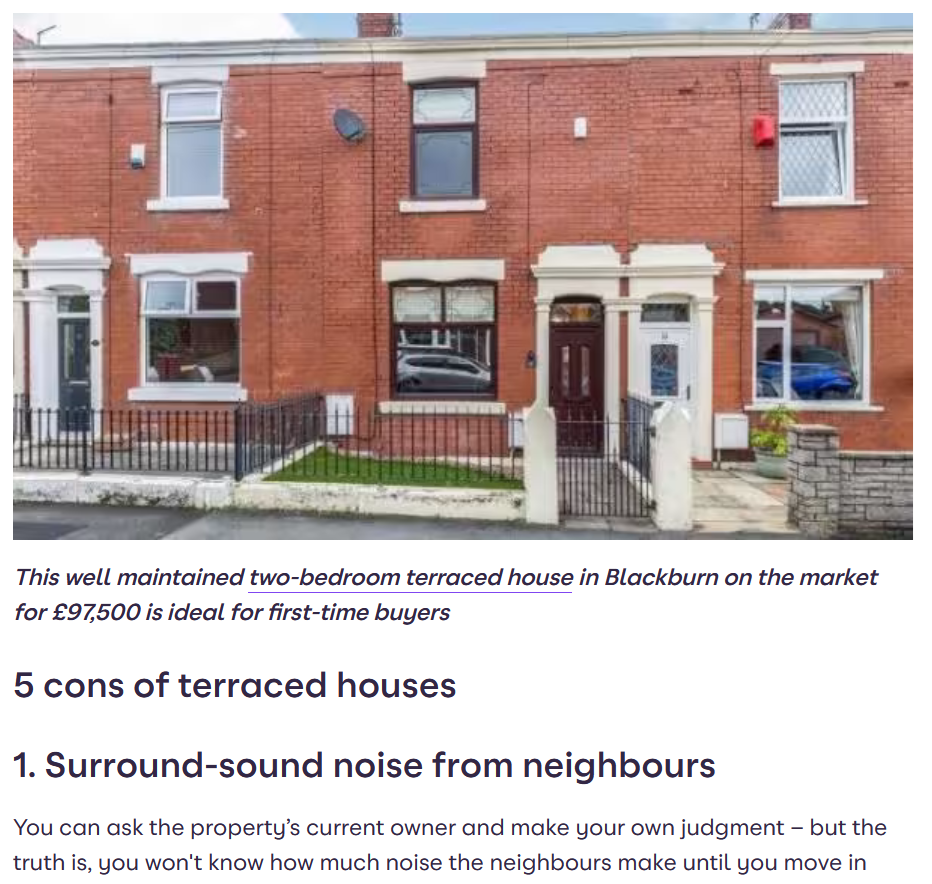
Subheadings break the content into manageable sections. They improve readability, help readers scan the post quickly, and give search engines additional context about the topics covered. Using keyword-rich subheadings helps your SEO because they tell search engines what the post is about.
FAQs
Frequently asked questions are a way to address common queries directly within the post. They improve the user experience, increase the chances of appearing in rich results, and provide additional keyword relevance without forcing it into the main text.
Here’s an example on the topic of mortgage affordability.

Schema
Structured data, or schema, tells search engines exactly what type of content the page contains. Implementing schema can enhance visibility in search results with rich snippets, making it easier for users to find the answers they’re looking for.
Internal links
Linking to other relevant pages on your site helps distribute authority, guide readers to additional resources, and signals topical depth to search engines. It’s a simple but powerful way to strengthen overall SEO performance.
Clear CTA
While the blog’s primary goal is to inform, a clear call-to-action helps convert engaged readers into leads. Whether it’s booking a valuation, signing up for alerts, or downloading a guide, the CTA guides the next step without being intrusive.

TF-IDF
Term Frequency-Inverse Document Frequency is a way to understand how relevant certain words are across similar content. Using it strategically can help ensure your post covers the topic comprehensively and naturally, without overstuffing keywords.
The different kinds of content
Not all content is created equal, and different types of posts serve different purposes. Some are designed to capture local search traffic, others to build authority on a national scale, and some provide ongoing value over time. Understanding the distinctions helps you base your content strategy on your business goals.
Targeted local content
Local content focuses on specific towns, postcodes, or neighbourhoods where your agency operates. It targets people searching for services in a defined geographic area, like “estate agents in [town]” or “houses for sale in [postcode].” Creating strong local content usually requires moderate effort: you need accurate property data, insights about the local market, and sometimes client stories or case studies to add authenticity. Its primary purpose is to capture high-intent local search traffic and convert readers into enquiries or valuations.
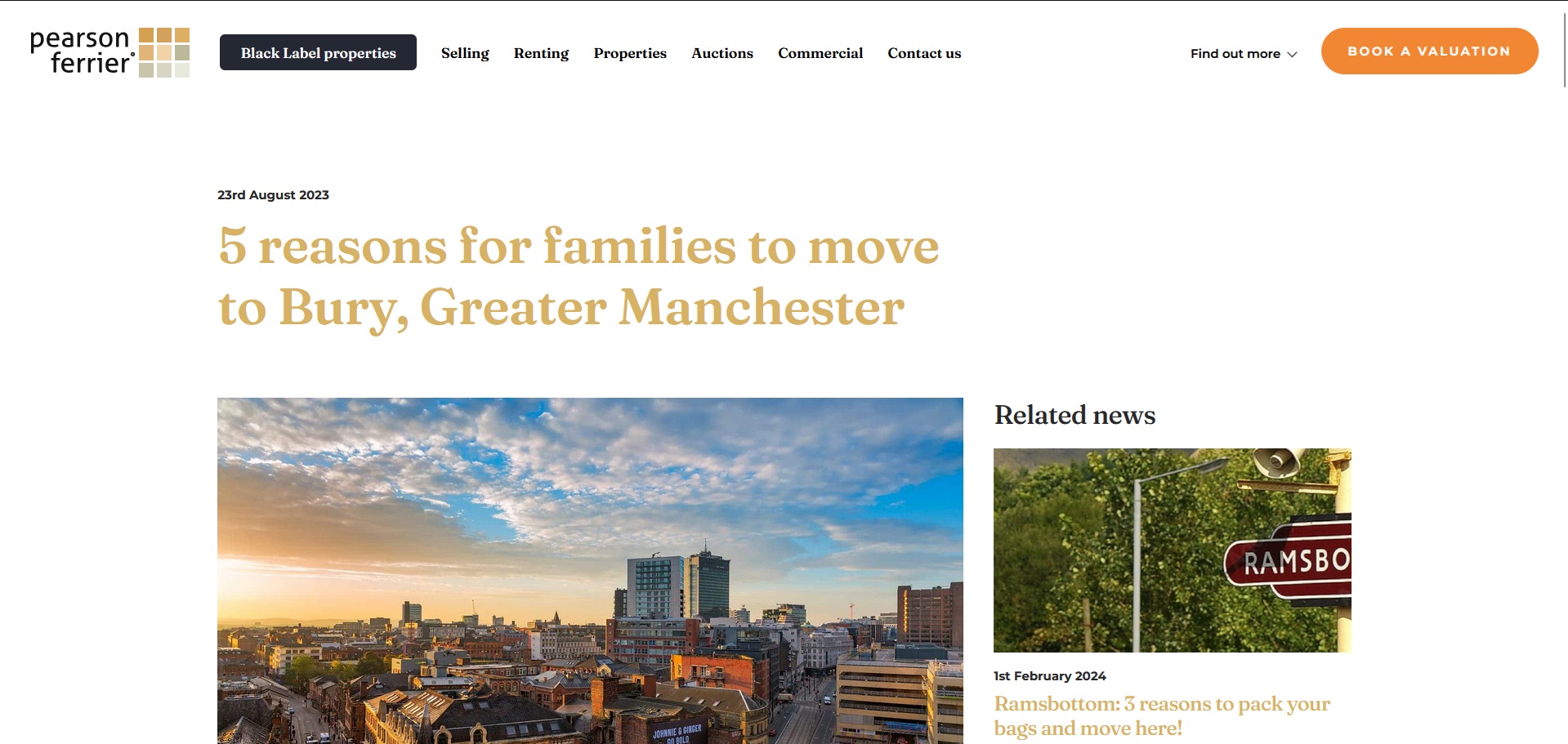
Here’s an example from Pearson Ferrier — “5 reasons for families to move to Bury, Greater Manchester“. This post picks up on traffic for “move to Bury” and similar keywords, and pushes readers to get in touch with a clear closing CTA. Beyond that, it’s a genuinely useful little guide to what makes Bury a great place to live.
Targeted national content
National content targets broader property-related searches that aren’t tied to a specific area, such as “buy-to-let guide” or “UK property market trends.” These pieces tend to be more competitive, requiring more research and effort to stand out, including data analysis, expert commentary, and clear explanations of complex topics. The goal is to reach a wider audience, build authority in the national property market, and attract visitors who may eventually narrow their search to your local services.
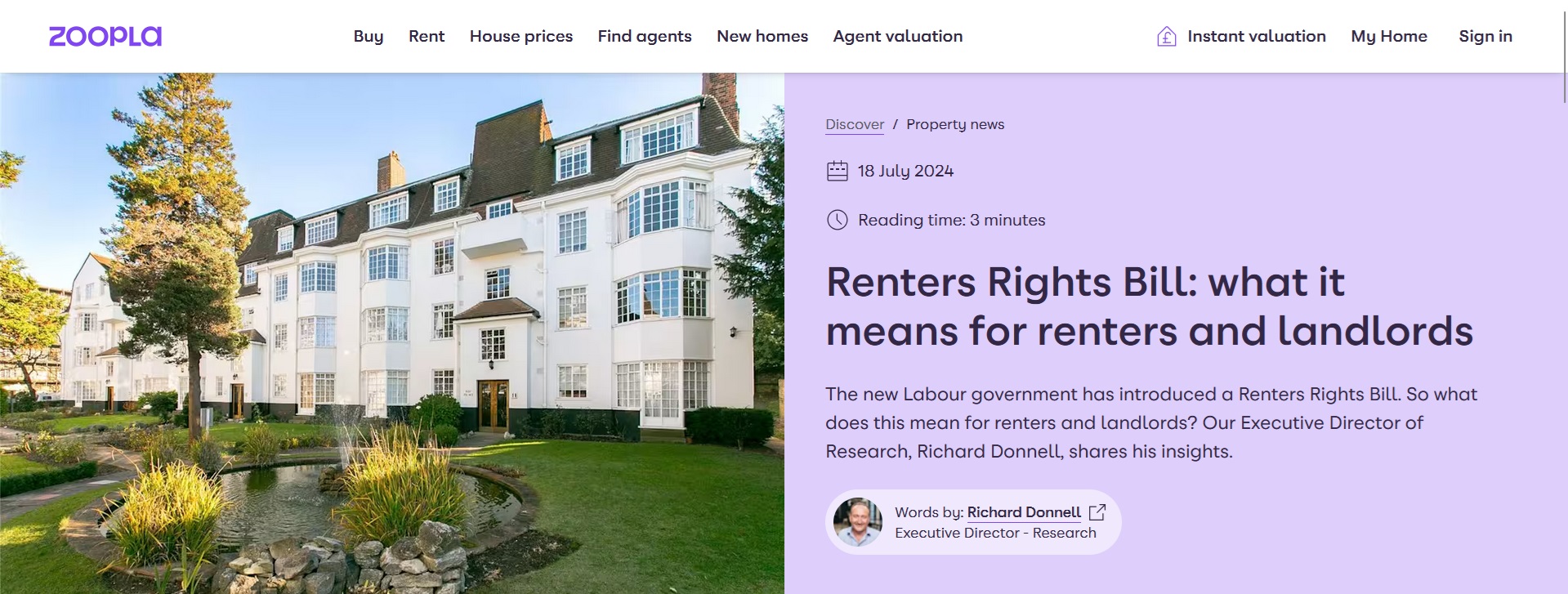
Your example here — a post on Zoopla about the Renters’ Rights Bill. This targets big, high-volume, national-level keywords that they can rank for with their great backlink profile and topical authority.
Evergreen content
Evergreen content covers topics that remain relevant over time, like “how to value a property” or “steps to selling a home.” It requires upfront effort to make it comprehensive, accurate, and clear, but once published, it continues to attract traffic with minimal updates. Its main purpose is to provide consistent, long-term value, boost search visibility over time, and establish your site as a reliable resource for fundamental property knowledge.
Resources
Resource content includes guides, checklists, templates, calculators, or downloadable tools that help readers complete tasks related to buying, selling, or renting. These pieces often require significant effort to produce because they combine practical utility with clear explanations, but they generate high engagement and return visits. Resources are primarily designed to support users through the property journey, position your agency as helpful and trustworthy, and encourage repeat visits or email sign-ups.
Digital PR content
Digital PR content is designed to attract attention beyond your website, often through shareable articles, infographics, or research insights that other sites reference. It targets backlinks, media coverage, and wider brand visibility rather than direct local conversions. As such, it might not be posted on your site at all, but on other sites that link back to you.
Creating this content can be resource-intensive, involving original research, compelling data presentation, and outreach, but it builds authority, strengthens SEO through high-quality links, and improves your agency’s profile in the broader property market.
Content strategy
A strong content strategy starts with knowing exactly what your audience is searching for and how your site fits into that landscape. Keyword research is the foundation: identifying the phrases and questions potential buyers, sellers, or landlords are using allows you to target content effectively. Tools like SEMrush or Ahrefs make it easy to spot high-value keywords, understand search volumes, and analyse competitor performance. You can then map these keywords into a content calendar and track progress.
Topical authority and EEAT (Expertise, Experience, Authoritativeness, Trustworthiness) are the next step. Search engines favour websites that demonstrate deep knowledge and credibility in their niche. For estate agents, this means producing content that consistently covers property topics in your area, backed by accurate data, clear explanations, and practical advice. Over time, consistently high-quality content builds trust with both readers and search engines, making your site a go-to source for property information.
Content gap analysis helps uncover opportunities where competitors are covering topics that your site hasn’t yet addressed. By identifying these gaps, you can create content that fills the void, attracts new search traffic, and strengthens your position in the market. Internal linking then ties everything together, guiding readers to related posts, reinforcing the structure of your site, and signalling to search engines how different pages relate to one another. Together, these steps form a strategy that maximises visibility, relevance, and long-term SEO impact.
Options for estate agents
Working with an SEO agency is a common choice for agents who want expert guidance without managing every detail in-house. Agencies bring experience, tools, and a structured approach to research, writing, and optimisation. This can save time and provide confidence that content is aligned with best practices, but it usually comes with an ongoing cost and requires clear communication about priorities and goals.
Writing content internally gives full control over tone, local insight, and brand voice. It allows teams to leverage their on-the-ground knowledge of neighbourhoods, clients, and property trends. The trade-off is time and resource: producing high-quality, optimised content consistently can be challenging alongside day-to-day estate agency work.
Outsourcing content to freelance writers or specialised content providers sits between agencies and internal teams. It can reduce workload while still accessing professional writing and SEO expertise. However, maintaining consistency in style, accuracy, and local relevance requires careful briefing and review.
AI-generated content is increasingly popular for producing drafts, idea generation, or scaling production quickly. It can save time and offer inspiration, but it still needs human oversight to check accuracy, local context, and readability. Using AI effectively means combining automation with editorial input to ensure content meets both search engine standards and the expectations of your audience.